Success Stories
Statewide Compressed Natural Gas Infrastructure Program
The New Jersey Compressed Natural Gas Refuse Trucks, Shuttle Buses, and Infrastructure Project was the first state-wide alternative fuel vehicle deployment program in New Jersey. The project deployed more than 300 natural gas refuse haulers and shuttle buses belonging to 15 public and private fleets, and six new compressed natural gas (CNG) fueling stations throughout the state, including: Newark, Camden, Trenton, Morris County, and Egg Harbor Township. The initiative also included activities to educate the public and other fleets about the benefits of using clean burning, domestically produced natural gas in vehicles. Managed by the New Jersey Clean Cities Coalition, the project leveraged a $15 million grant from the US Dept of Energy with an additional $35 million of non-federal money. More than 1 million gallons of petroleum are saved every year as a result of this project.
Initiative for Resiliency in Energy through vehicles (iRev)
Led by the National Association of State Energy Officials (NASEO), iREV was a multi-partner, national effort to catalyze state and local acceptance and deployment of alternative fuel vehicles (AFVs) and infrastructure in preparing for and responding to man-made and natural disasters and emergency situations. To ensure state and local emergency management and energy assurance plans better integrate alternative fuels at the planning stage, iREV provided the emergency preparedness and response community with data, tools, and resources needed to make optimal fleet investment decisions.
As an example of AFV use In actual emergency situations, NJCCC worked with stakeholders in Atlantic City to strengthen the city’s Emergency Evacuation Plan. The Plan was put to the test during Superstorm Sandy in 2012 when gasoline and diesel became unavailable. During this time, the availability and accessibility for compressed natural gas remained steady and the CNG-fueled Atlantic City jitneys were able to evacuate many people from flood prone areas of the region.
Truck Stop electrification
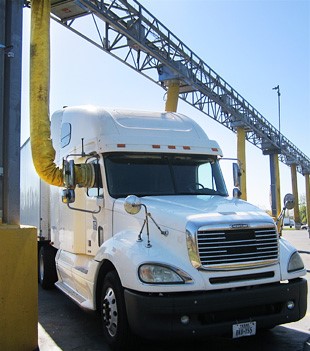
Truck drivers on long-haul routes must have mandated rest periods at truck stops to refuel both them and their vehicles. During these rest periods, many drivers have to idle their vehicles to access air conditioning and heat. However, this practice causes unnecessary idling, fuel consumption, and tailpipe emissions. To reduce these effects, the New Jersey Clean Cities Coalition partnered with IdleAir to create a truck stop electrification (TSE) site at the Flying J Travel Plaza in Carneys Point. This stop provides off-board electricity to power a truck’s HVAC systems without requiring the vehicle to run. As of January 2021, the stop has seen more than 19,000 billable hours of service, representing 227 metric tons of mitigated emissions and approximately 19,000 gallons of diesel fuel savings.
“We’ve received lots of positive feedback from truckers and fleet managers. Truckers can reduce their fuel consumption; comply with new, more stringent anti-idling regulations; and enjoy the benefits that truck stop electrification (TSE) offers. It’s a win-win.” - Chuck Feinberg, Coordinator of New Jersey Clean Cities Coalition
Electric School Bus
Several webinars were recorded, including this one with an introduction from Senator Booker for the recent NJ School Board Association
Decarbonizing gas
New Jersey Clean Cities Coalition, in collaboration with Energy Vision, presented the virtual workshop “Decarbonizing Gas in New Jersey” on November 4, 2021. We discussed the role of renewable gases in supporting the Garden State's climate, clean air and economic goals by hosting numerous New Jersey clean energy experts as speakers. The full agenda and speaker biographies can be found here. The coordinated presentation can be downloaded here.
Green Hydrogen Forum
New Jersey Clean Cities Coalition in partnership with the NJ Fuel Cell Coalition presented this virtual forum on June 29, 2021. The goal was to educate and raise awareness of green hydrogen and the energy, environmental and economic impacts to New Jersey of its production, distribution and use. Representatives from government, stationary and mobile hydrogen stakeholders, service providers and end users helped identify opportunities and share perspectives on the latest technology and policy developments to drive New Jersey's clean energy economy forward.
Video Playlist
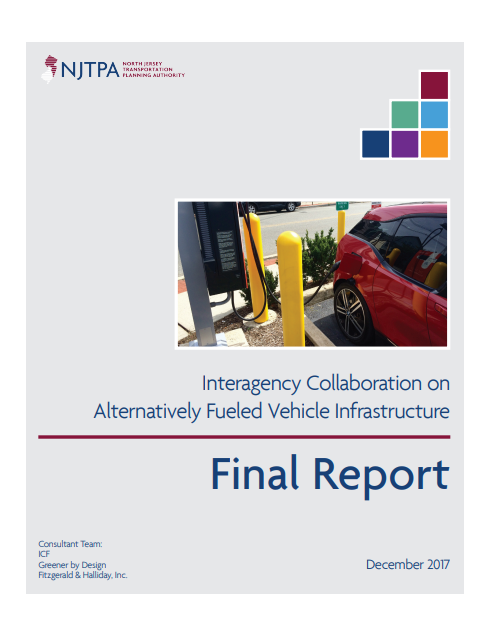
Interagency Collaboration on Alternatively Fueled Vehicle Infrastructure
The Mid-Atlantic Electric School Bus Experience Project (MEEP) encouraged the usage of electric bus fleets in school districts in New Jersey, Virginia, Maryland, Pennsylvania and Washington D.C. The project provided school districts, school bus contractors and their stakeholders with electric school bus education, ride and drive opportunities, fleet demonstrations, route performance analysis and other planning tools and resources.
NJ Clean Cities worked with several organizations with similarly aligned goals of providing a user level introduction to electric school bus technology to a wide range of stakeholders in New Jersey. The result of this work included several state specific resources including the NJ Electric School Bus Buyers Guide and the this webinar. The program allowed school districts to gain experience with electric school buses from multiple OEM manufacturers and repowers. If your organization has more questions about ESB’s or would like to talk more about integrating ESB’s or other alternative fuel vehicles into your fleet please contact us.