Drive Electric NJ
Project Overview
As a partner in the national Drive Electric program, New Jersey Clean Cities is one of 28 partner coalitions across the country, spearheading a transformative movement in the electric vehicle (EV) landscape by providing essential support and resources to state partnerships. Its core mission is to dismantle the obstacles hindering the growth of EV education, engagement, and adoption across various communities. DENJ serves as a prime example of how diverse states can effectively foster the widespread use and ownership of EVs, encompassing everything from personal vehicles to fleet automobiles.
Our organization is dedicated to the supporting and enhancing key project objectives, including educating consumers and officials, engaging with dealerships and fleet managers, planning EV infrastructure, and supporting the growth of local EV chapters. In New Jersey, this comprehensive approach is part of the broader state EV initiative, demonstrating a commitment to fostering widespread EV use and ownership, from personal vehicles to fleet automobiles.
Participating States

Driving New Jersey EV Adoption
Priority Areas
Our project Priority Areas were developed around known barriers to EV adoption. In the DEUSA 2, each state is tackling roughly 8-10 different specific subtasks of work towards breaking down those barriers in their states. See below for the major description of the work being completed.
1) Statewide Branded EV Programs
Create a strong branded EV program, guided by a committee of EV stakeholders and encompassing locally based chapters. These programs will attract support and resources, coordinate action across all other Priority Areas, and increase positive exposure.
2) Consumer Education
Directly educate at least 1,000 consumers through the organizing of and/or participation in in-person EV Ride-and-Drives (R&Ds) and other tactics. They will also develop and support local EV chapters (at least two per state) to coordinate R&Ds based on a variety of outreach and event models, and gather and analyze participant experience and educational impacts.
3) Utility and Regulator Education
Educate and partner with investor-owned, municipal, and cooperative utilities, and state utility regulators. They will base their educational pathway on evolving best practices for utility EV programs and their unique partnerships and challenges, and relay the benefits of transportation electrification for all stakeholders to all stakeholders. Initiative leadership will conduct seminars, forums, R&Ds, and other convenings towards achieving collaborative results.
4) EV Charging Infrastructure and Planning
Conduct gap analyses and develop or update plans for EV charging infrastructure in each of the 14 Partnership states at statewide, regional and community levels. Use analyses to educate a wide range of stakeholders and plan deployment of EVSE at all levels and site types in each state.
5) Education of State and Local Government Officials
Educate government officials in New Jersey. Focus on best practices for incentive programs for vehicles and infrastructure, state building codes, weights and measures issues for public EVSE, among others. At the local level, focus on guidance for charging in public rights of way, signage and parking enforcement, local building codes, and government fleet electrification.
6) Dealer Engagement
Develop “preferred” EV dealer programs. Build web-based platforms to help channel interested EV purchasers to preferred dealers. Partner with “low touch” Internet- based retailers that sell EVs, especially in portions of states still underserved by supportive dealers.
7) Fleet Engagement and EV Adoption
Meet with personnel to drive EV adoption in an average of at least 10 fleets per state.
Key Documents
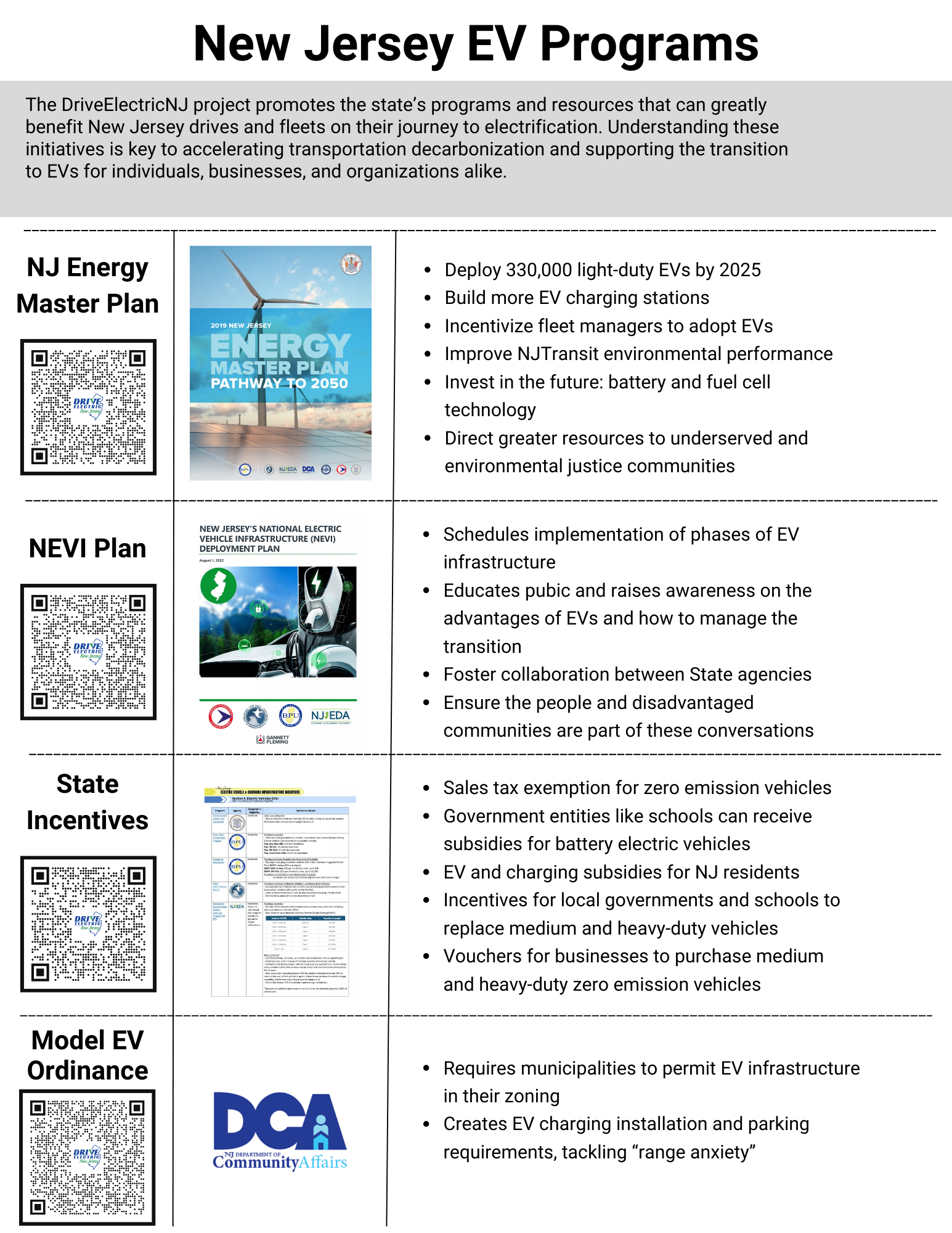
Energy Master Plan
Clean energy is vital for our future from both an economic development and environmental sustainability policy perspective. With this in mind, Governor Murphy, through Executive Order 28, has set an ambitious goal of setting New Jersey on the path to 100% clean energy by 2050, and we are moving full speed ahead.
nJ NEVI Plan
The NJ EV Plan proposes an initial strategy, prescribed by the National Electric Vehicle Infrastructure (NEVI) Program, to install fast chargers every 50 miles along our nominated corridors, and simultaneously proposes that all of our State’s stakeholders need to be heard from, particularly those in
disadvantaged communities, where energy, transportation and pollution burdens have historically been greatest.
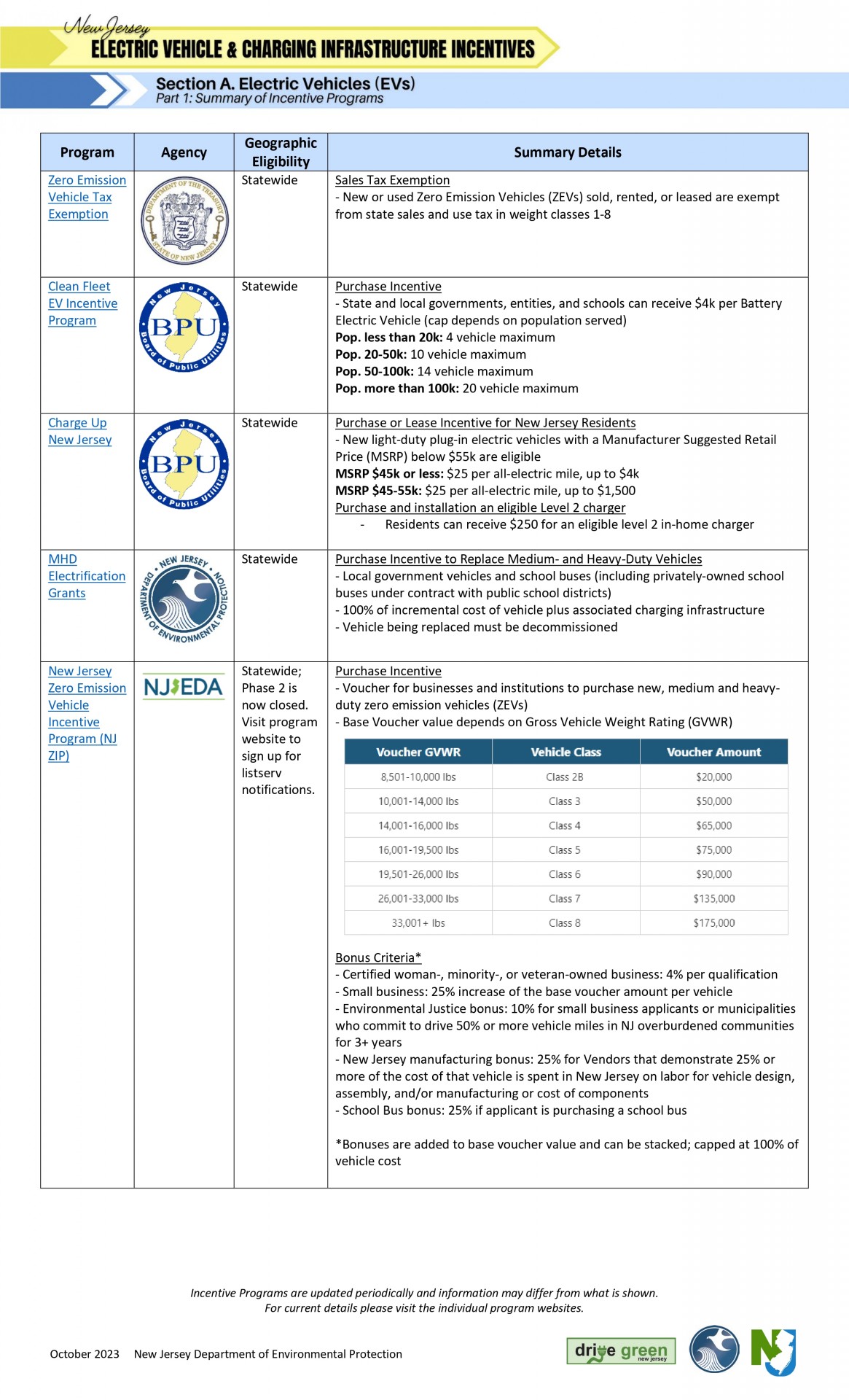
State Incentives
There are valuable state, federal, and utility incentives to make the transition to electric easier. This document highlights New Jersey specific funding programs from various state agencies and local utilities to help find the incentive that's right for you.